Practical Survey Design for Decision Makers
From information gap to reliable evidence.
Most organizations will encounter occasions when they need to know more than they currently know.
- What do customers really think?
- Why are employees responding the way they are?
- Why are customers leaving?
- Would people value a new service?
- How widespread is a concern?
- What are we missing?
A survey may help answer those questions. But only if it is done well.
Build a Capability Your Organization Can Use Again and Again
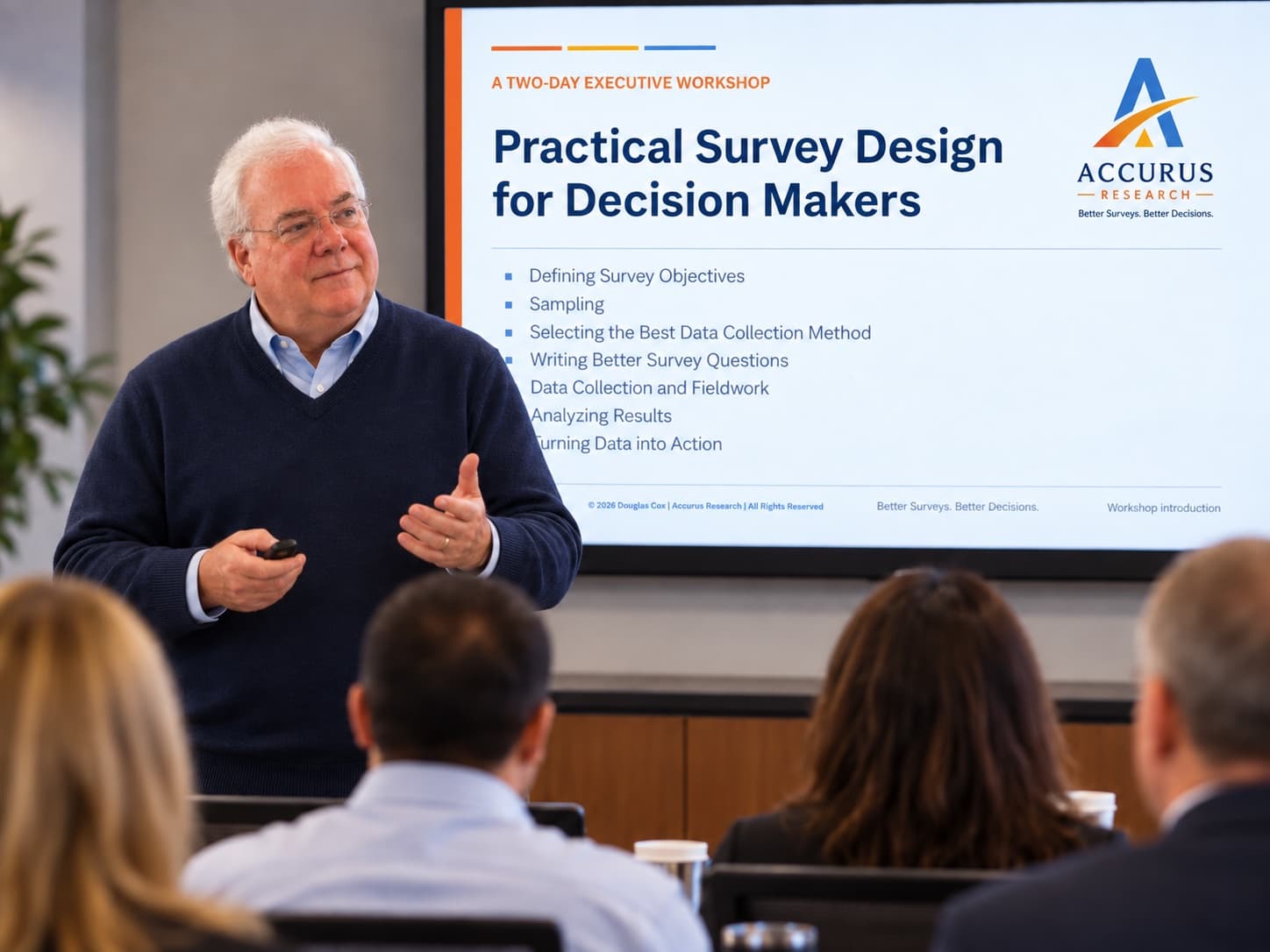
Practical Survey Design for Decision Makers is a two-day, hands-on workshop designed to give participants a practical working knowledge of the survey research process.
The goal is not to turn participants into professional survey researchers.
It is to give them the knowledge and tools needed to approach an organizational survey thoughtfully, recognize common mistakes, make sound methodological choices and produce evidence that decision makers can use with greater confidence.
The 7-Step Survey Success Cycle
Participants work through the complete survey research process.
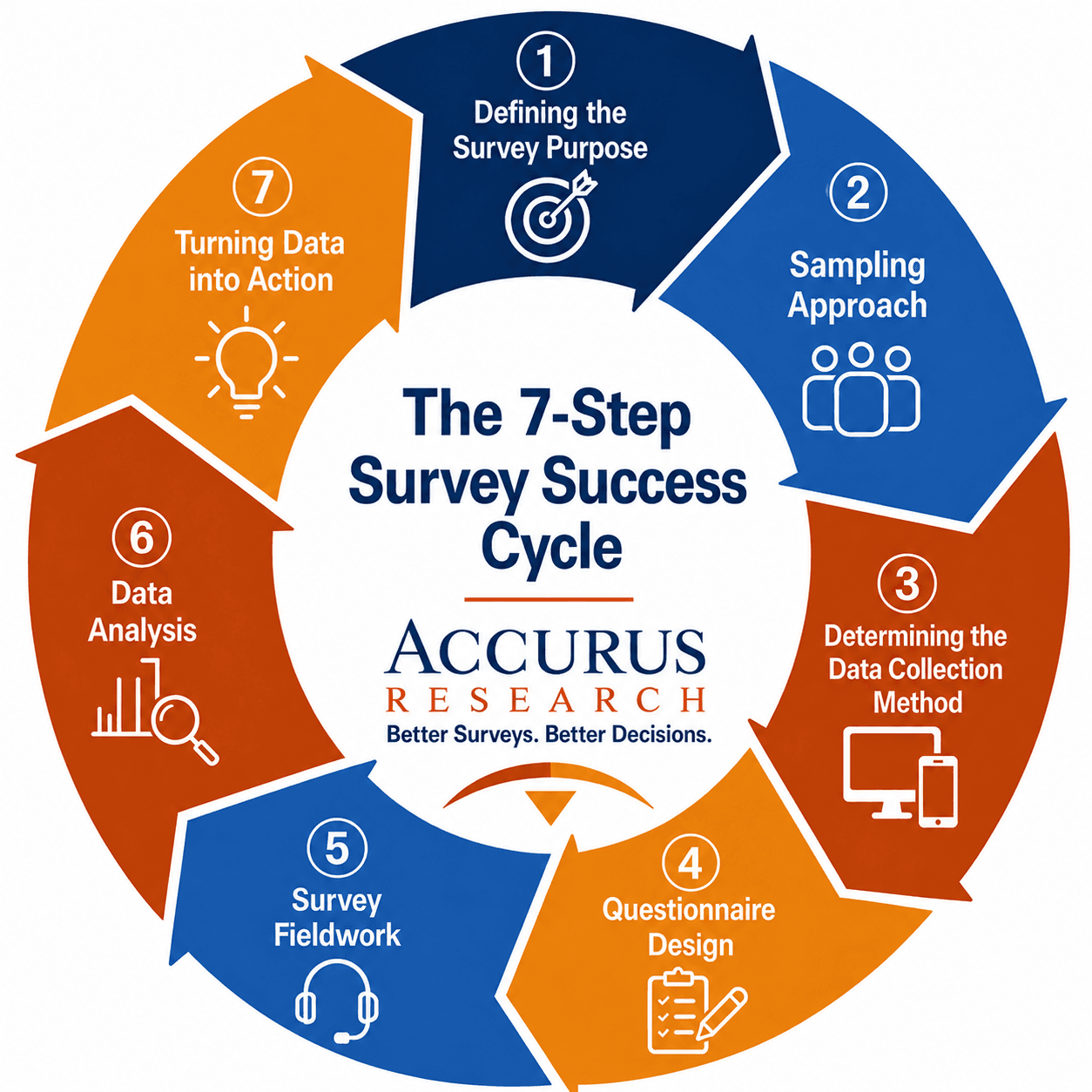
- 1Defining PurposeWhat are we trying to learn—and what decision will the information support?
- 2SamplingWho needs to be represented, and how will they be selected?
- 3Data Collection MethodWhat is the most appropriate way to gather the information?
- 4Questionnaire DesignHow do we ask questions that respondents can understand and answer accurately?
- 5FieldworkHow do we launch, monitor and manage the survey while protecting data quality?
- 6Data AnalysisWhat does the data actually show?
- 7Turning Data into ActionWhat do the findings mean—and what, if anything, should we do?
Learning by Doing
This is not two days of lecture. Participants work through exercises, examples and a continuing organizational case study that follows the survey process from an initial business concern through analysis and decision making. They confront the kinds of choices that occur in real research:
- Who should we survey?
- How many people do we need?
- Which data collection approach makes sense?
- Is this question biased?
- What does this finding really tell us?
- Are two groups meaningfully different?
- Does the evidence support the conclusion we are about to make?
The emphasis throughout is practical:
What would you do—and why?
Participants Leave with More Than Notes
Each participant receives a comprehensive workshop workbook designed to remain useful after the workshop ends.
The workbook includes key concepts, exercises, planning tools, examples and reference material that participants can return to when an actual survey need arises.
Participants also receive a bonus resource addressing Online Surveys in Today’s World and the opportunities and challenges associated with modern online survey research.
Who Should Attend?
The workshop is designed for people who may be asked to plan, conduct, oversee or interpret surveys as part of their responsibilities, including those working in:
Your Organization Doesn’t Need to Conduct Surveys Every Week
That isn’t the point. The value comes when an important question arises once or twice a year and someone inside the organization knows how to respond.
Instead of immediately launching a few questions through an online survey platform, your team can first ask:
- What are we trying to learn?
- Is a survey really the right way to learn it?
- If it is, how do we do it well enough to trust the result?
That is organizational survey capability. And that is what this workshop is designed to build.
Discuss Bringing the Workshop to Your Organization
Whether you’re considering an executive presentation, the two-day workshop, or a second set of eyes on an upcoming survey, a conversation is the right place to start.